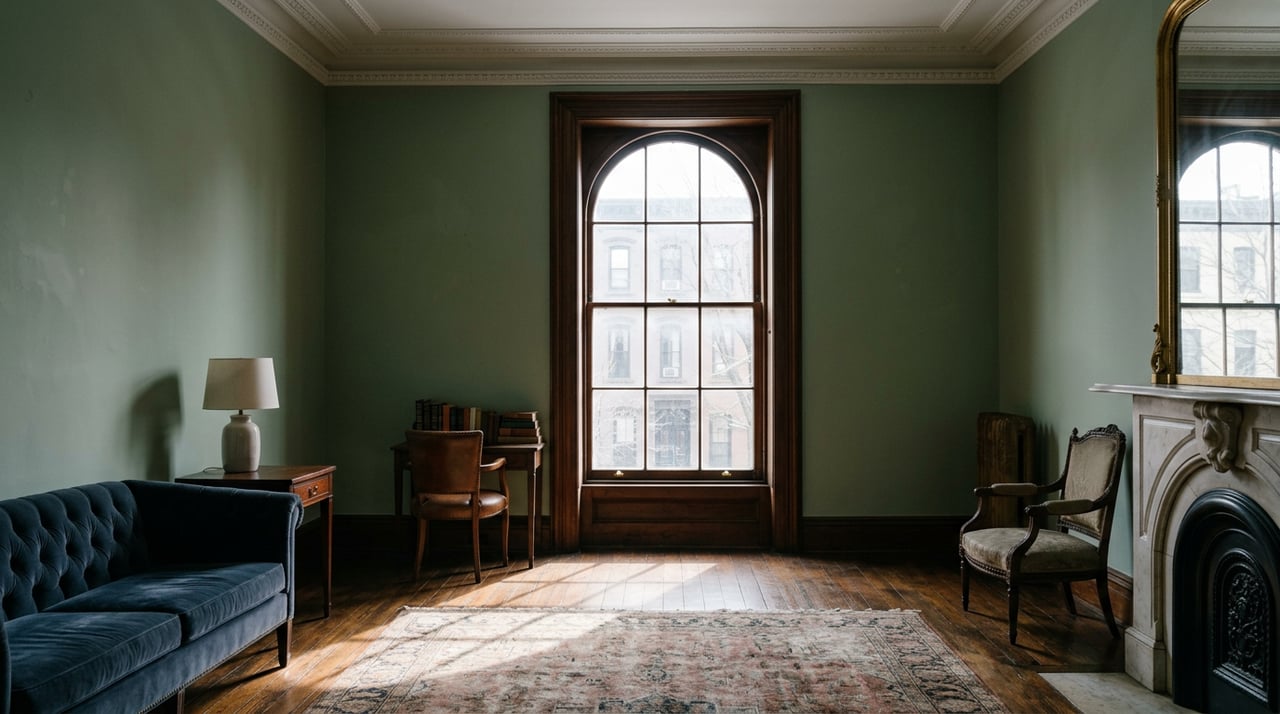
A buyer walks through a beautifully restored brownstone on a leafy Uptown Hoboken block. Exposed brick, restored moldings, a garden level that could be a home office. Then comes the question the agent has been waiting for: where does the car go?
The honest answer, for most of these houses, is the street. Uptown Hoboken's brownstone stock was built in the 1840s through the 1890s, long before anyone imagined a driveway. Most of these homes were never built with attached parking, and there is no retrofitting that away. A buyer who assumes a $95 annual permit solves this problem has not actually solved it. They have bought a lottery ticket.
The permit that isn't the price
Hoboken sells its on-street resident parking permit for $95 a year for a first vehicle, with second and third vehicles rising to $200 and $300, under the fee schedule the city put into effect on June 1, 2026. That fee covers a fraction of what it costs the city to manage the curb. The Hoboken Parking Utility subsidizes the resident permit by roughly 90 percent, which keeps the sticker price low and predictable.
What it does not do is guarantee anywhere to park. A permit buys the right to compete for a spot, not the spot itself. When the price of holding a car on the street is set that far below what curb space is actually worth, more people hold cars on the street. Hudson County View's reporting on the city's April 2026 council session cited an ordinance finding that roughly 20 percent of Hoboken streets now have more than three permits issued for every available parking space on that block.
That is not a shortage the way a housing shortage is a shortage. It is closer to a ticket that costs a dollar for a seat that seats one in five buyers. The city has priced the permit for accessibility, not for clearing the market, and the difference between those two goals is exactly where a buyer's real parking cost hides.
Where the real number hides
If the permit does not buy certainty, certainty gets purchased somewhere else. In Hoboken that shows up in one of two places: a monthly garage contract or a deeded parking space attached to a condo.
| Option | What it actually buys | Typical cost |
|---|---|---|
| On-street resident permit | The right to compete for a spot, not a guaranteed one | $95 to $300 per year, per vehicle |
| Monthly garage space | A guaranteed spot for as long as the contract runs | $175 to $325 or more per month |
| Deeded condo parking space | Outright ownership of the spot, tied to the unit | $25,000 to $75,000 added to the purchase price |
Run the monthly garage number over a five-year hold and it adds up to somewhere between $10,500 and $19,500, paid in cash, with nothing to show for it at resale. A deeded space priced at the low end of its range, financed into the same mortgage as the home, can cost less over that same stretch once the math accounts for what the space is worth when the unit eventually sells. That is the part a listing sheet never spells out. Two homes with the same square footage and the same asking price can carry very different true costs depending on which column their parking situation falls into, and a buyer who only compares list prices is missing the column that decides the winner.
The cheapest option on paper, the resident permit, is the one least likely to deliver what a buyer actually wants: somewhere to put the car when they get home.
Uptown's brownstones didn't leave room for this
This math matters everywhere in Hoboken, but it lands hardest in Uptown, where the housing stock is oldest and the driveways are scarcest. A rowhouse buyer weighing a brownstone against a newer condo a few blocks away is not just comparing architecture. They are comparing a home that forces the street-permit gamble against one that may come with a deeded space already built into the deal.
Hoboken's own zoning code addresses this scarcity directly. City ordinance bars new curb cuts entirely in the R-1 district and along Washington Street, which means even a brownstone owner who wanted to carve out a driveway today would likely be blocked from doing so. The full text is on the books through the city's zoning code on off-street parking. The rules were written to protect what little curb space exists for everyone, but the practical effect is that Uptown's parking supply is close to fixed. New driveways are not coming.
What the city is building instead
The city's answer, for now, is public infrastructure rather than more curb cuts, and it just took its first visible step. On September 14, 2026, Hoboken opened 60 temporary parking spaces on 15th Street between Willow Avenue and Park Avenue, a stopgap lot built in partnership with Rockefeller Group while the city works toward something bigger: Uptown's first-ever municipal parking garage.
That future garage, planned for 275 spaces on the block just south of the temporary lot, will be the first new municipal parking facility built anywhere in Hoboken since 2003. It is part of the North End Redevelopment Plan, a project with a long runway. The City Council designated the area in need of rehabilitation back in December 2013 and did not adopt the master redevelopment plan until March 2021. Last December, the council approved four redevelopment agreements with Park Willow LLC, a Rockefeller Group subsidiary, clearing the way for 729 residential units, 73 of them reserved as affordable housing, alongside the garage and more than 38,000 square feet of ground-floor retail.
Rockefeller Group Vice President Zachary Csik framed the temporary lot as a bridge for the neighborhood while the larger project moves forward. Mayor Emily Jabbour has described the garage and the surrounding streetscape work, including new crosswalks and a protected bike lane tied into the 15th Street Green Circuit, as steps toward a safer, more multimodal North End. Worth remembering: this is the first municipal parking investment Uptown has seen in over two decades, arriving thirteen years after the city first flagged the area for redevelopment. Public parking supply moves on a much slower clock than the private market does. The deeded-space premium adjusts every time a unit sells. The garage takes over a decade to break ground.
What to check before you write an offer
A buyer weighing a car-dependent lifestyle against an Uptown brownstone or a newer building with parking should confirm a short list of things before getting attached to a number on a listing sheet.
- Ask exactly what "parking included" means. A deeded space that conveys with the unit is a different asset than an assigned spot controlled by the condo association, which is different again from a unit that is simply eligible for a street permit.
- If parking depends on a monthly garage contract, get the cancellation terms in writing. Most run month to month with 30 days' notice, but some require 60, which matters if a move is on the table within the first year.
- If the plan is to rely on the new 15th Street lot, remember it is explicitly temporary. It will close once construction starts on the permanent garage, and no firm groundbreaking date has been set.
- Price the garage or deeded-space cost into the total monthly carry, the same way taxes and HOA dues get priced in, rather than treating it as an optional extra.
None of this makes Uptown Hoboken a harder place to live. It makes it a neighborhood where the parking line item deserves the same scrutiny buyers already give to taxes and building fees, because in a mile-square city with a fixed curb, that line item can be the difference between a home that works for daily life and one that quietly doesn't.
A couple of questions we hear often
Does a deeded parking space add to a condo's assessed square footage? No. A deeded space is typically recorded as a separate piece of the deed rather than counted as livable square footage, but it still carries its own value and its own line on the purchase contract.
Will parking in Uptown actually get easier once the new garage opens? It should ease pressure on nearby blocks once the 275-space facility is built, but the city has not announced a construction start date, and the temporary 15th Street lot is designed to close once that work begins. Buyers should treat any improvement as a future benefit, not a current one.
Parking decisions in Uptown Hoboken are ultimately property decisions, and they deserve the same building-by-building scrutiny as taxes, exposure, or resale history. If you are comparing a brownstone against a newer building, or trying to figure out what a specific unit's parking situation is actually worth, The Sutherlin Group can walk through the real numbers for that address before you write an offer. Request a Showing to start the conversation.